You’ve hit your numbers three quarters running. Your SEC filings are spotless. Your earnings calls are professional, your management team is well prepared. Yet your stock price remains frustratingly flat—or worse, declining—while competitors with weaker fundamentals command premium valuations.
Here’s the uncomfortable truth: your “compliant” investor relations might be the very reason your stock is consistently undervalued, not “misunderstood” investors.
Your ‘Compliant’ IR Might Be Costing You Millions
Most CEOs operate under a dangerous assumption: that having an IR team, fulfilling regulatory compliance, and maintaining basic communication means their investor relations are effective. They tick the boxes—SEC filings submitted on time, earnings calls scheduled quarterly, press releases distributed properly—and assume the market will reward strong fundamentals.
The reality is far more costly.
After twenty years sitting across the table from public company management teams as an institutional investor, I’ve watched countless companies with impeccable compliance records see their stock prices stagnate or slide. These weren’t companies with accounting irregularities or governance scandals. They were operationally sound businesses whose leadership teams genuinely believed their “by-the-book” approach would eventually pay off.
It never did.
The hidden costs of this compliance-first mentality are staggering:
- Valuation discounts of 20-40% compared to peers with strategic narratives
- Increased volatility as confused investors trade on uncertainty rather than conviction
- Limited access to capital when growth opportunities arise
- Board pressure that escalates as quarters pass without valuation improvement
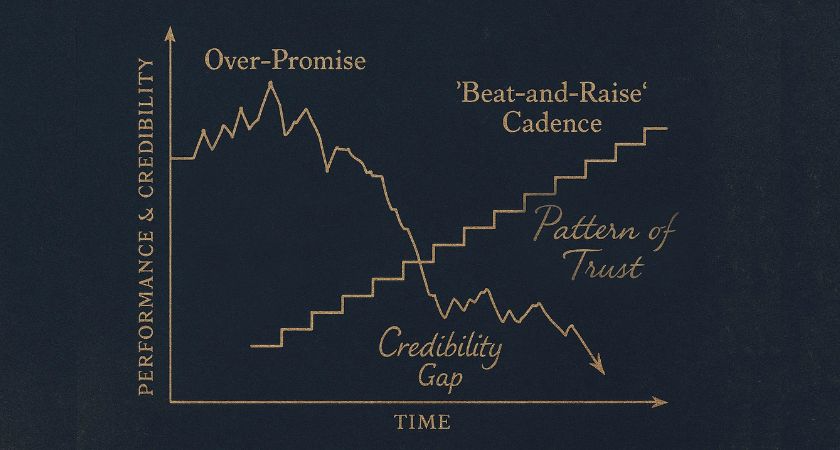
- Management credibility erosion that compounds with each disappointing market reaction
The most damaging aspect? CEOs often blame “irrational markets” or “shortsighted investors” rather than examining whether their communication strategy is fundamentally flawed. But sophisticated institutional investors aren’t irrational—they’re responding precisely to the signals you’re sending, even when those signals aren’t intentional.
The real risk isn’t missing a compliance deadline. It’s failing to capture and sustain an investor’s imagination and long-term confidence.