The Board Meeting Reality Check: When Performance and Valuation Don't Match
You're in the boardroom. Quarterly numbers exceed guidance. Market share is growing. Customer satisfaction scores are strong. But when your CFO pulls up the stock chart, the room goes quiet.
This scenario plays out in boardrooms across America every quarter. Management teams who have delivered on every operational metric watch their stock trade sideways or decline. Board members start asking uncomfortable questions. Activist investors begin circling. The CEO feels the pressure mounting.
After serving on investment committees for two decades and later leading Finance & IR as an SVP, I've witnessed this disconnect from both perspectives. The frustration is real, but so is the solution. The gap between performance and market recognition isn't always about fundamentals; it can often be it's about how those fundamentals are packaged, positioned, and presented to the investment community.
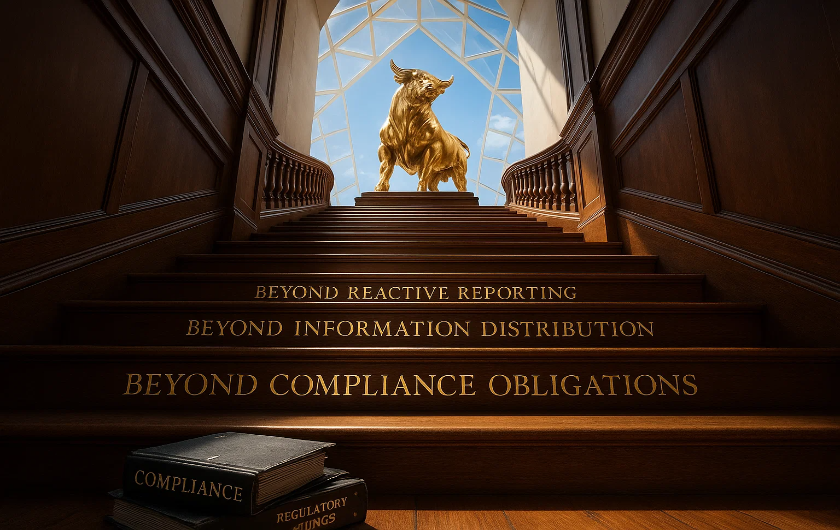
Most companies approach investor relations as a reporting function. They provide accurate data, meet compliance requirements, and check the communication boxes. But institutional investors aren't just buying your historical performance. They're investing in their confidence about your future trajectory.
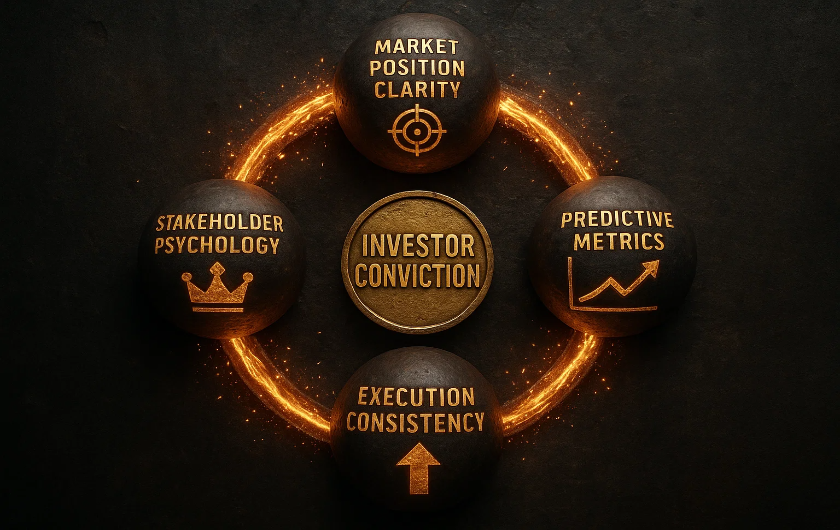
This investor relations strategy playbook reveals what separates companies that trade at premium valuations from those that don't. The difference isn't operational excellence; it's narrative engineering that translates performance into investor conviction.
What Institutional Investors Really Want (And Why Most Companies Miss It)
During my years as an institutional investor, I sat through hundreds of management presentations. The companies that earned my investment weren't necessarily the best performers. They were the ones who understood what I needed to make a confident buy decision.
Institutional investors are portfolio managers under pressure. They need simple, defensible investment theses they can explain to their investment committees.
Most management teams focus on explaining what they do rather than why investors should care. They provide operational updates instead of investment narratives. They report metrics instead of meaning. This approach fails because it puts the burden of interpretation on investors who don't have time to decode complex business models.
The companies that consistently attracted institutional capital understood a fundamental truth: investors buy stories they can retell with confidence. Not fictional stories, but clear, compelling narratives about competitive advantage, market opportunity, and predictable execution.
This insight shaped my development of what I call the Valuation Narrative System™. This investor relations strategy framework helps companies communicate in the language institutional investors actually use when making allocation decisions.